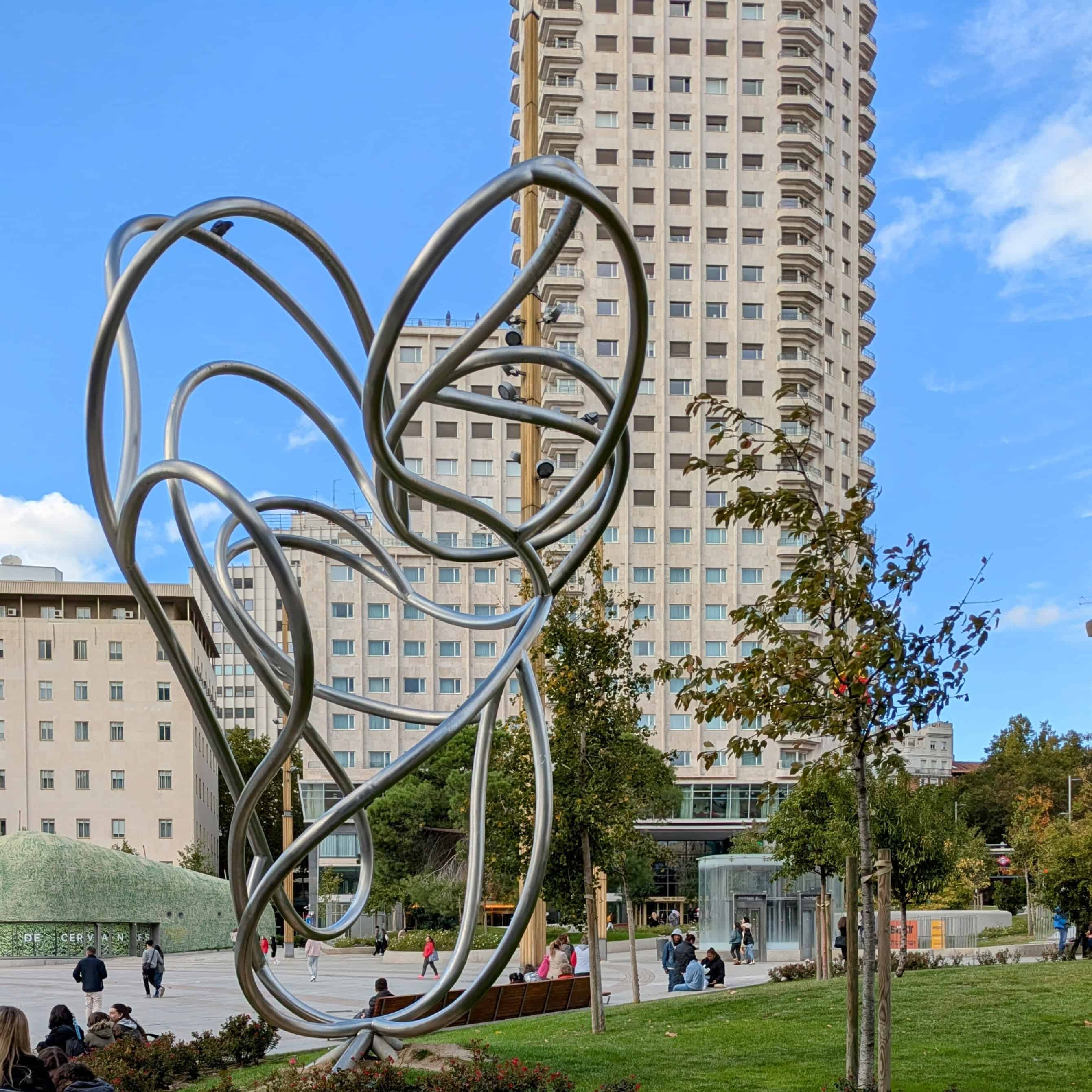
People will tell you that a visit to Madrid is a delightful experience. They will speak of sunny plazas and ancient artworks, of savory tapas and streets that hum with a certain vibrancy. But they will neglect to mention the very real possibility of getting lost in a labyrinth of alleyways, the often sticky nature of churros con chocolate, or the profound sadness one might feel when faced with a work of art so beautiful it reminds you of all the things you have never seen and may never see. What follows is an account of the various things one may do in Madrid.
Here’s my Google Map of the best things to do in and around Madrid. Hit the “Follow” or “Save” button to save for later.
This post contains affiliate links and I may earn a small commission when you make a purchase using the links at no additional cost to you.
If this is your first stop in Spain, read my 10 tips for planning a trip to Spain.
While I do my best to provide up-to-date regular admission ticket prices for attractions, you will find that this particular city seems to be particularly concerned with ensuring that anyone, regardless of their circumstances, can visit its many marvels, which it does by providing a variety of free and discounted tickets for all manner of individuals.
Best Things to See and Do in Madrid
- People watch in Plaza Mayor – Plaza Mayor is simply a large, rectangular public square. Historically, it has served as the stage for a variety of grim events. Imagine, if you will, the chilling spectacles of public executions, the equally unsettling and theatrical ceremonies of the Spanish Inquisition, and the bloody sport of bullfights. In happier times, the plaza is a place for a more mundane sort of public gathering, a place where one might simply enjoy a glass of wine while listing to a street musician’s accordion. It is lined with restaurants and shops, and it is a place where tourists, with their tell-tale maps and wide-eyed naivety, wander in circles.


- Eat!: Be sure to at least try churros con chocolate and tortilla Española. If you’re looking for more, here’s my full list of foods to seek out and places to eat and drink in Madrid.

- Visit the Museo Nacional del Prado – The Museo Nacional del Prado is a repository for the art collected by the monarchs of Spain, a collection so vast and so riddled with masterworks that it could make a person dizzy. The museum holds an impressive number of paintings by Goya, including his famously macabre “Black Paintings.” Or one can stand before the intricate panels of Bosch’s “The Garden of Earthly Delights” and ponder the strangeness of humanity, or gaze upon the unnerving gazes of the figures in Velázquez’s “Las Meninas.” Timed general admission tickets are available for 15€, and a good audioguide is available for an additional 5€. Free admission is granted daily 2 hours before closing. While tickets can be obtained at the door, advance online purchase is recommended.

- Take a leisurely walk through Parque de El Retiro (El Retiro Park) – This public park was once the exclusive domain of the Spanish monarchy, a vast royal retreat where kings and queens could entertain themselves with lavish parties, naval battles on a grand pond, and other peculiar forms of recreation. As you meander along the various walking paths in the park, you will find a great pond with a large monument to a king that is, for all intents and purposes, a place for renting small, brightly-colored rowboats. There is the Crystal Palace, a magnificent glass building that was once used to house exotic plants and is now a echo-filled space for modern art installations. And there is a statue of the fallen angel, Lucifer himself, which stands at exactly 666 meters above sea level, rather unholy altitude indeed.


- Tour the Palacio Real de Madrid (Royal Palace of Madrid) – Built in 1735, this is the largest royal palace in Western Europe, a distinction that is a source of great pride to some. Although it remains the official residence of the Spanish monarchy, it has been, for some time, an empty and rather theatrical gesture. The royal family, with a sensible preference for a more modern and less drafty domicile, chooses not to live there, leaving the vast, echoing halls to be filled with the footsteps of tourists and the hushed whispers of tour guides. It is a house of several thousand rooms, a museum of ostentatious display, and a place where you can see a throne, a bed, and a crown, none of which are being put to any use whatsoever. Standard admission self-guided visit tickets are available for 14€, with multiple guided tour options also available. Tickets are for timed-entry so advance online purchase is recommended.


- Explore the Museo Nacional Centro de Arte Reina Sofía – This museum was established in what was an old hospital, a fact that seems rather fitting, as the art within is often so distressing it feels like a fever dream. The collections here are dedicated to more modern art, including examples of Cubism, Surrealism, and abstract expressionism. The most famous work within its walls is “Guernica” by Pablo Picasso. This immense mural, a black, white, and gray testament to the horrors of war, depicts the bombing of a Basque town with a series of shrieking, dismembered figures and animals. General admission tickets are available for 7€. Online ticket purchase is recommended unless you want to spend several lovely hours in queue.


- Admire the collection at Museo Thyssen-Bornemisza – This museum, which occupies a grand palace, holds paintings that were too new for the Prado’s collection of old masters and too old for the Reina Sofía’s focus on modern art. You will find within its walls a sprawling and encyclopedic display of Western art, from the melancholic religious paintings of the early Renaissance to the cheerful blobs of color from the abstract expressionists. It is a place to be seen by those who wish to be exposed to centuries of human artistic effort in a single afternoon. General admission is available for 14€ and tickets can be purchased online. There is free admission from 12 p.m. to 4 p.m. on Mondays, and 9 p.m. to 11 p.m. on Saturdays.

- Museo Naval (Naval Museum) – This museum, devoted to the grim history of the Spanish Navy, is housed within the Spanish Navy’s General Headquarters. Inside, one can find a truly overwhelming assortment of naval artifacts which tell a story of exploration and battle. There are meticulously crafted ship models, replicas of vessels that often met a terrible and final fate at the bottom of the sea. The most notable item on display is the “Universal Chart” by Juan de la Cosa, a map from the year 1500 which is thought to be the first to depict the Americas, a document that represents the beginning of a long history of colonization, exploitation, and a great deal of human misery. Admission to this museum is free with a suggested donation of 3€.
- Admire the iconic architecture along Gran Vía – The Gran Vía is a very wide and very long street that was constructed after a great deal and demolition. It was a project that required the removal of some three hundred buildings and a number of smaller, more discreet streets. But now it is a grand avenue lined with buildings of startling grandeur. You will find the Metrópolis Building with its statue of a winged goddess, and the nearby Telefónica Building, which, for a time, was the tallest building in Madrid. Today, this thoroughfare is filled with grand architecture, department stores, and a bewildering number of people.


- Take in the ambiance of Puerta del Sol (Gate of the Sun) – The Puerta del Sol is a square that began its life as a gate in a city wall. Today is recognized as the the very center of Spain, the point from which all the country’s great roads are measured. A small plaque on the ground marks “Kilometer Zero,” a spot where countless tourists stand to take a photograph. You will also find here a statue of a bear attempting to eat the fruit from a strawberry tree, an image that is both peculiar and, for reasons lost to history, the official symbol of Madrid. And there is a clock on top of a very old post office building that, on New Year’s Eve rings out, causing a a great deal of stress as people hurry to eat twelve grapes, one for each chime, a tradition as strange as it is universally embraced. And with all of these sights, it’s easy to remain blissfully unaware of the tragic history of the Old Post Office building itself. Under the long and unyielding rule of a certain general, the building was used as the headquarters for the state’s security forces.


- Eat youre way through Mercado de San Miguel – The Mercado de San Miguel is a magnificent building of iron and glass, a monument to a time when architects believed that even a humble market should be a work of art. On the other hand, it is no longer a place for the simple act of grocery shopping. It has been transformed, for reasons that have a great deal to do with modern tastes and the economics of daily life, into a food hall. It is now filled with dozens of small stalls, each one offering a different delicacy, from plates of sliced ham to fresh seafood, and you will see a great many people – so many, in fact, that one can barely move – standing with small plates and glasses of wine. It is a place where one can taste a great many things, but one should do so with a measure of caution, and with a firm grip on one’s wallet.


- Be bewildrered by the Templo de Debod (Temple of Debod) – The Templo de Debod is a very old Egyptian temple that, through the construction of a very large dam along the Nile River, a series of international transactions, and an alarming amount of effort, found itself unceremoniously placed into the middle of a hilltop park in Madrid. Most people will only see the exterior of the temple, but it is possible to get a ticket to visit the interior. Tickets for a given month are available for purchase online beginning on the 15th of the previous month.


- Visit the Catedral de Santa María la Real de la Almudena – For centuries, after the Spanish court had moved from Toledo to Madrid, the city found itself without a proper cathedral. Plans were drawn up, then put aside, then drawn up again, as is typical of civic construction plans. Construction began, in a very small and not at all cathedral-like manner, in the late 19th century. Then it stopped. And started. Then stopped again. The result is a building that is, to a discerning eye, a patchwork of architectural intentions. It was not until 1993 that the cathedral was finally consecrated, in a ceremony presided over by Pope John Paul II. Regular admission tickets can be purchased at the door for of 7€.


- Explore the Monasterio de las Descalzas Reales (Monastery of the Royal Barefooted) – This monastery was founded in the 16th century by a princess in her own former palace. It was a place for noblewomen, often from very wealthy families, who, for one reason or another, chose to devote themselves to a monastic life. The accumulated wealth of these aristocratic nuns was so vast and that the monastery quickly became a repository for a truly stunning collection of tapestries, paintings, and religious artifacts. Today, what you will find is a place that is still a functioning convent, a fact that is as peculiar as it is rare, but which also serves as a museum. A guide will lead you through rooms filled with masterpieces by Titian, Rubens, and other masters, all of which were collected and hoarded by women who were supposed to have sworn off earthly possessions. Timed-entry tickets are available online for 8€.
- See the Puerta de Alcalá (Gate of Alcalá) – This gate is a grand and imposing arch standing in the middle of a particularly frantic roundabout. It was once the main entrance to the city and has two different facades: one side, which faced out of the city, is decorated with trophies and weapons; the other side, which faced into the city, is decorated with olive branches and wreaths.

- Bar hop around Barrio de La Latina – This neighborhood is one of the oldest parts of Madrid, a labyrinth of winding, narrow streets that serve only to make a person feel utterly and completely lost. Today, its narrow streets are filled with an endless stream of people who have come for the consumption of tapas and the drinking of wine. It is a place where one can find a bewildering number of small bars, each with its own peculiar offering of bite-sized foods.
- Shop El Rastro – This immense and rather chaotic flea market is not merely a place for commerce; it is an unsettling microcosm of humanity’s peculiar habit of holding onto things long after they have outlived their usefulness. Held every Sunday and public holiday, El Rastro is a place where thousands of vendors set up stalls along a maze of steep, crowded streets. Here, one can find a bewildering array of objects. There are piles of old clothes, boxes of books with cracked spines, and a truly spectacular number of curious items.


And so, having navigated the twists and turns of Madrid, you may find yourself with the entirely pleasant and overwhelming sensation of having a delightful time. Madrid is a place of such uncommon pleasures that you may find yourself in the position of not wanting to leave. If you’re looking for more, here’s everything I’ve written about Spain.



Leave a Reply