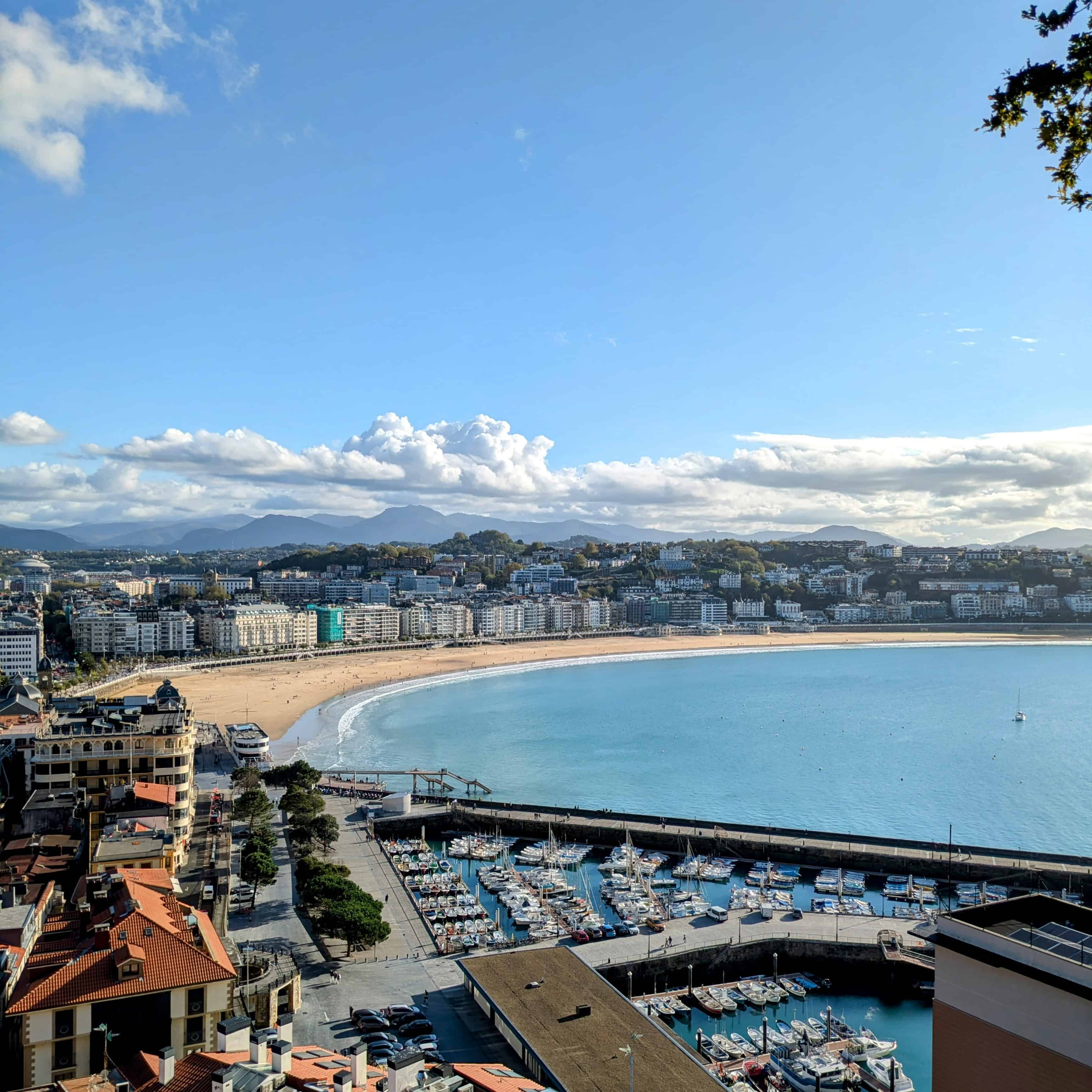
If you find yourself in the unfortunate circumstance of being drawn to the coastal Spanish city of San Sebastián, I must warn you that it is a place of exquisite beauty and unparalleled culinary delights. This city, nestled between the Pyrenees and the Atlantic Ocean, is a trap for the unwary traveler. Its picturesque beaches, charming old town, and world-renowned cuisine are impossible to refuse.
I would recommend spending two full days in San Sebastián and more if you plan to use it as a base from which to visit the Irati Forest, Pamplona, or other spots around the Basque region of Spain. Read on for my complete San Sebastián travel guide.
Here’s my Google Map of the best things to do in and around San Sebastián. Hit the “Follow” or “Save” button to save for later.
This post contains affiliate links and I may earn a small commission when you make a purchase using the links at no additional cost to you.
If this is your first stop in Spain, read my 10 tips for planning a trip to Spain.
San Sebastián Travel Guide
- What to Expect
- What to See and Do in San Sebastián
- Getting to San Sebastián
- Getting Around San Sebastián
- Where to Stay in San Sebastián
- Where to Eat in San Sebastián
- What Else to Do Near San Sebastián
What to Expect
Imagine, if you will, a city where the very air hums with the clinking of wine glasses and the murmur of satisfied sighs, a place where the cobblestones whisper tales of culinary adventures. The streets, rather unnervingly clean, wind through an Old Town that feels both ancient and strangely well-preserved. The beach curves like a well-loved teacup, surrounding waters perfectly suited for those who enjoy the rather damp sport of surfing. And should you find yourself atop one of the surrounding hills, you’ll find views that might inspire a moment of unadulterated contentment.
What to See and Do in San Sebastián
- Explore Parte Vieja/Old Town: Cobblestone alleys wind their way through centuries-old buildings, their weathered facades whispering tales of a bygone era. The air is thick with the aroma of freshly baked bread and the salty sea breeze. As you wander through the narrow streets, you’ll encounter a tapestry of shops, bars, and restaurants, each with its own unique charm.

- Enjoy a Gin & Tonic in Constitución Plaza: Once, it was a bullring, a fact one might find either fascinating or vaguely unsettling, depending on one’s disposition toward large, horned animals. Now, it serves as a gathering place, a sort of communal living room where locals and tourists alike congregate, perhaps to discuss the price of pintxos, or the proper way to avoid tripping on a stray cobblestone.
- Explore the rather unsettling history of the Basque people at the Museum of San Telmo: Artifacts and displays whisper tales of traditions and customs, some of which are, dare I say, quite peculiar. Should you find yourself visiting this museum, be prepared to learn something you never knew you needed to know. Regular adult admission is €10, with free admission on Tuesday and a multitude of discounted and free entry options.
- Climb up Monte Urgull: At its summit, a rather large Christ stands guard, or perhaps merely observes the people of San Sebastián, with an unsettlingly serene expression. The views, one must admit, are quite extensive, allowing one to observe the city and its surrounding waters with an almost unnerving clarity. The remnants of a castle perch atop the hill, a collection of stones that seem to have decided, rather stubbornly, to remain in place. Start by taking the stairs to the right of San Telmo Museum or the stairs to the left of the Aquarium.


- Bretxa Public Market: This traditional Basque market was undergoing some updates when we were visiting so we didn’t get to see it, but there were produce stalls set up in the plaza outside the market in the morning.

- Sunbathe on the Beach of La Concha: La Concha is a sandy beach in the shape of a seashell with waves that have a penchant for crashing down upon unsuspecting sunbathers with all the force of a disgruntled hippopotamus. By wary of the seagulls with their beady black eyes and incessant squawking as they seem to delight in snatching up unprotected ice cream cones.


- Visit the Aquarium: This is a building filled with glass tanks, where one might observe fish of various sizes and hues, swimming in patterns that suggest either a profound understanding of aquatic choreography or a complete lack of direction. There are also, of course, sharks, and exhibits on local fishing and naval history. Regular adult admission is €14.
- Enjoy some of the pintxos that San Sebastián is famous for. A food tour is a great option that allows you to try a number of different dishes over the span of a few hours. Here are a few well rated options.

Getting to San Sebastián
Fly: San Sebastián Airport (EAS) is located about 12 miles east of town and offers flights to a small number of destinations across Spain.
Train: There are two train stations in San Sebastián. Most likely if you’re coming from somehere in Spain, you’ll arrive at the San Sebastián Renfe Station. If you’re coming from France, you’ll arrive at the Amara-Donostia Station. They’re both less than a 15-minute walk to Old Town.
Bus: San Sebastián Bus Station is next to the Renfe Train station, a 15-minute walk to Old Town.
Driving: If your accomodation doesn’t offer parking, there are a number of paid parking lots available, such as this one near La Concha.
Getting Around San Sebastián
From San Sebastián Airport:
- There are a few buses available to take you into town for around €2.75 – double check fare and pay the driver when boarding. Use Google Maps transit directions to check schedules for your trip.
- A taxi into town will cost about €38. Uber is theoretically allowed to operate in San Sebastián, but there were literally none to be found when I needed a ride.
Walking: San Sebastián is an incredibly small and walkable town, so that’s going to be your choice most of the time.
Bus: Use Google Maps to search routes and schedules. Fares will be around €2 – ask the driver for exact fare and pay when boarding.
Taxi and Rideshare: Taxis start at about €7 but you can’t flag them down and they don’t always reliably show up at taxi stands. Call Vallina Teletaxi or Taxi Donosti or use Uber to request a ride.
Bikeshare: You can also choose to use dBizi bike shares (apple / Android).
Where to Stay in San Sebastián
When it comes to accommodations in San Sebastián, you’ll most likely want to stay near La Concha or Old Town for easy access to the beach and a plethora of restaurants. Filter by neighborhood and find a hotel that’s in your price range, with the amenities you want.
- We stayed at Intellier Victoria which is located in a quiet area that is easily walkable to Old Town and La Concha. We liked it for its location and modern feel at an affordable price along with the offer of breakfast.
Where to Eat in San Sebastián
San Sebastián is known across the globe for its pintxos, bite-sized morsels of culinary artistry that tantalize the taste buds. These delectable creations range from simple yet sublime combinations, such as grilled anchovies nestled upon a slice of crusty bread, to more elaborate concoctions, featuring specialty ingredients and molecular gastronomy techniques.
If you find yourself in San Sebastián and wish to experience the culinary delights the city has to offer, you will almost certainly find yourself dining at Gandarias, Borda Berri, Betijai Berria, and Bar Txepetxa. If you’re looking for more, here’s my full list of places to eat and drink in San Sebastián.

What Else to Do Near San Sebastián
Pamplona
Pamplona, a city nestled in the heart of Navarre province in Spain, is a place of peculiar charm and unexpected peril. Its annual Running of the Bulls during the Feast of San Fermín in July, an exhilarating but brutal tradition, draws daring individuals from around the globe. Follow Ernest Hemingway’s route through the historic Old Quarter, with its narrow cobblestone streets and ancient buildings, a charming place to wander and explore. And, of course, there’s the delicious local cuisine, featuring hearty stews, savory tapas, and, of course, plenty of Rioja wine. Try some txistorras (spicy and greasy pork sausage) with eggs.
Cuevas de Zugarramurdi
The Cuevas de Zugarramurdi is a karst cave complex located near the Basque town of Zugarramurdi. The caves, as it turns out, are steeped in a sinister history. Legends whisper of 17th century witches’ covens, dark weekly rituals, and unspeakable horrors. A wooded trail leads to the complex with a history dating to the Inquisition. General admission is €6.
Selva de Irati (Irati Forest)
The Irati Forest is a rather extensive collection of beech trees located in the Pyrenees Mountains of Spain, near the border with France. Towering trees, their branches intertwined overhead, create a canopy of emerald green. Within this forest, one might encounter various creatures, such as deer and wild boar, who seem content to wander among the trees. Rivers, of a startling clarity, meander through the forest, and numerous trails offer opportunities for those inclined to hike or enjoy other outdoor activities.
Take a look! This article is now featured on GPSmyCity. To download this article for offline reading or create a self-guided walking tour to visit the attractions highlighted in this article, go to Walking Tours and Articles in San Sebastian.
Ultimately, San Sebastián is a city of such exquisite beauty that it will surely tempt you to abandon all caution and embark on a journey of unmitigated delight. I hope you’ve enjoyed this San Sebastián travel guide. If you’re looking for more, here’s everything I’ve written about Spain.


Leave a Reply