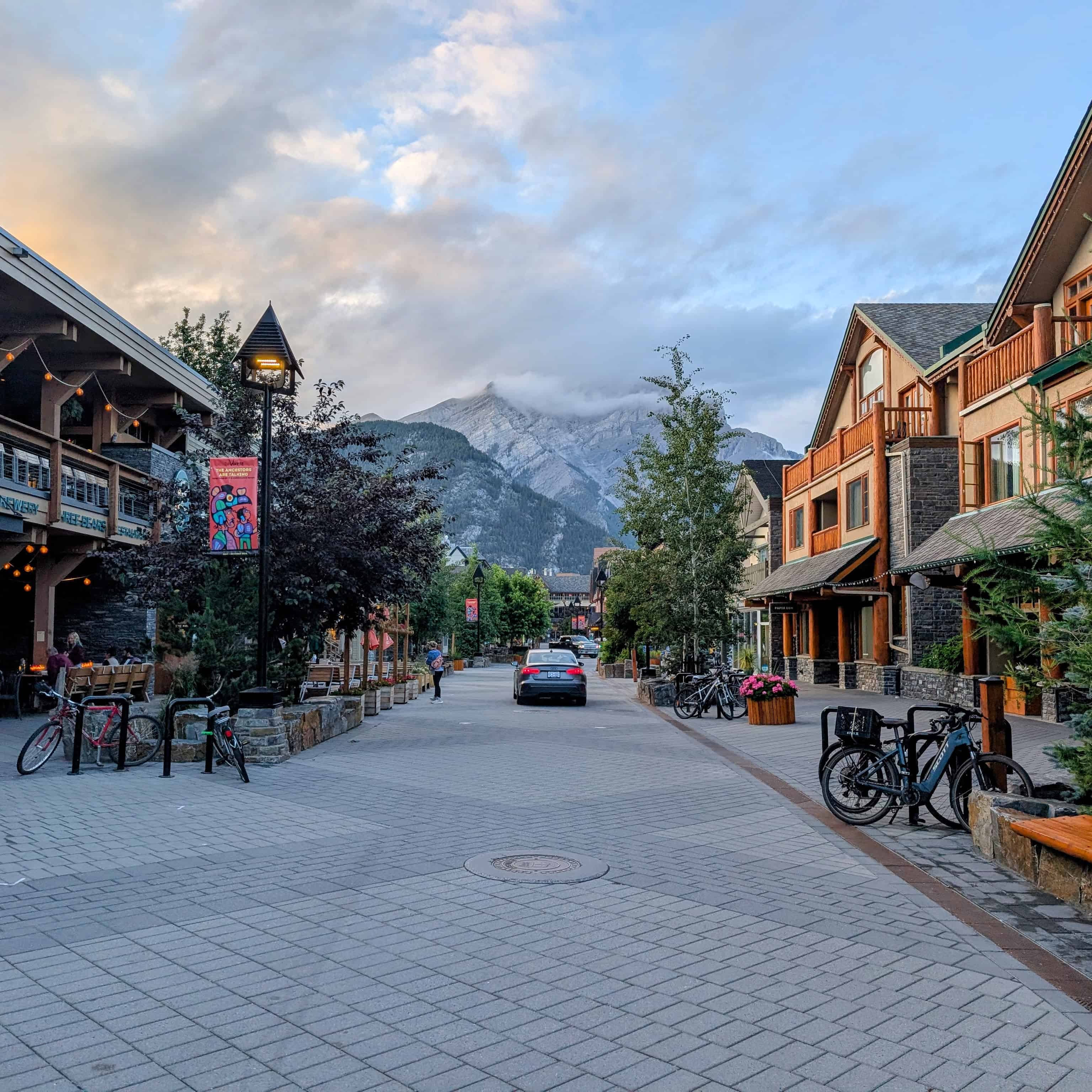
This guide is intended for those unfortunate souls who, for reasons I cannot fathom, have decided to travel to Banff. Situated in the heart of the Canadian Rockies, Banff is both a town and the National Park within which it is located, and they both seem to exist solely to prove that nature, in its most beautiful form, is also its most perilous. The mountains here are not merely hills; they are towering, monoliths that seem to scrape the very heavens, serving as a constant, looming reminder of your own insignificance.
You will be told that this place is a scenic wonderland, a term that, much like a smile from a stranger, should be viewed with extreme suspicion. The lakes, with their unnatural shades of turquoise, are said to be pristine, but what that really means is they are fed by glaciers and are so cold they could, and likely will, cause you to shiver so violently that your teeth might chip. The wildlife, which locals speak of with a disturbing fondness, are large, unpredictable, and quite frankly, terrifying.
I have visited this unfortunate corner of the world dozens of times so I urge you to proceed with extreme caution. This guide is not a companion for your journey; it is a somber warning of the many, many things that are about to go wrong. Plan to spend three or four days if you go, but do not say you were not warned.
This post contains affiliate links and I may earn a small commission when you make a purchase using the links at no additional cost to you.
- What to Expect
- What to See and Do in Banff
- Getting to Banff
- Getting Around Banff
- Where to Stay in Banff
- Where to Eat in Banff
What to Expect
Banff, for all its purported charm, is a place where the scenery is a constant and frankly exhausting assault on the senses. The mountains, which rise up on all sides, are not merely hills to be admired. They are great, jagged formations of rock, snow, and ice. The trees, a thick and claustrophobic congregation of pines and spruces, crowd together and cast long and oppressive shadows even on the brightest days. And then there are the lakes, a truly unfortunate sight. Their color, a disconcerting shade of turquoise, is a visual lie, a trick of the light designed to distract you from the icy, soul-crushing cold of their glacier-fed waters.
The wildlife in this park is not, as some would have you believe, a whimsical parade of friendly creatures. The bears, with their unnerving inclination for appearing where you least expect them, are less a marvel of nature and more furry reason to turn back and go home. The elk, with their great racks of antlers, are not to be trifled with and have an unsettling habit of congregating in the most inconvenient places, such as the middle of the road or directly outside your hotel. Even the smaller creatures, the squirrels and chipmunks, behave as if they know you are an intruder and are daring you to challenge their dominance.

And there is a tiresome list of ways to exhaust yourself. One is expected to hike, which is a cheerful term for walking uphill for a very long time, often in the cold, and usually with a sense of increasing despair. Another popular pursuit is canoeing, an activity that involves propelling oneself across an unpleasantly cold and deep lake in a small, unstable boat. And then there is the peculiar ritual of wildlife watching, which is a fancy way of saying anxiously scanning the treeline for anything large and hairy that might have a taste for tourists.
The people of Banff are perhaps the most puzzling aspect of the place. Many hail from faraway lands, and they are a ceaselessly cheerful and energetic bunch, their faces reflecting a kind of enthusiasm that can only be born of a fundamental lack of understanding. They are either blissfully ignorant of the many perils that surround them or have developed a particularly disturbing strain of masochism.
The town of Banff itself is a hodgepodge of souvenir shops, overpriced restaurants, and hotels, all crammed together in a valley. Lake Louise Village is equally uninspired.
A Park Pass is a required permit that grants you entry to Banff National Park. You can buy one of these ahead of time, which might save you a moment or two of waiting in a queue, or you can purchase one when you arrive at the park. Or perhaps you’ll be as fortunate as I, who, on two of my last three visits, was able to acquire such a pass for the perfect price of zero dollars. Here’s more info on Park Passes.
What to See and Do in Banff
While a person could spend an eternity cataloging the innumerable activities that one might undertake in Banff National Park, there are, alas, a few that I can scarcely avoid mentioning:
- Visit Vista Lake: Not to be confused with any other body of water that might also be stunningly picturesque. This particular watery expanse, situated a mere 1.4 kilometers from a small, often inconveniently full parking lot and the Arnica Lake trailhead, promises an easy stroll. A mere 60 to 90 minutes, a fleeting moment in the grand scheme of things.
One begins, naturally, by plunging downhill. A delightful start, certainly, as gravity pulls you effortlessly towards the blue-green expanse. But, as with all pleasures in life, what goes down, must invariably come up. A 120-meter climb awaits your weary legs on the return, a final, spiteful incline to remind you that nothing truly comes without effort, especially in the mountains.
- Ride the Lake Louise Gondola: Imagine, if you will, a contraption of metal and wire, designed, with a certain grim efficiency, to hoist unsuspecting souls ever higher into the cold, indifferent sky. One ascends, you see, not towards enlightenment, but merely to a greater elevation, where the air is thinner, the views are vast, and the possibility of a sudden, unexpected lurch is never entirely out of the question.
And why undertake such a perilous ascent? For the grizzly bears, of course. Yes, those lumbering, formidable creatures. It’s said to be one of the finest places on Earth to glimpse them in their natural, unkempt environment. Almost daily, tourists are treated to this rare and awesome spectacle, although one might wonder if “treated” is quite the right word in this case.
- Make the journey to Moraine Lake: This is a body of water, so impossibly blue it seems to defy the very laws of color, nestled precariously within a valley known as the Valley of the Ten Peaks. This particular lake, fed by the melt of glaciers does not reveal its full, astonishing azure until mid-to-late June. The color is due to rock flour, a fine sediment ground from the mountains, suspended in the water, refracting light in a manner that is both captivating and faintly disorienting.
And how does one reach this spectacle of perplexing beauty? Not by simply driving – that would be too easy. Instead, one must plan way ahead and rely on the precise, often crowded, schedules of shuttles from Lake Louise, public transit from the town of Banff, or private operators. Or, if one is truly desperate for solitude, one can bicycle or walk the 10 kilometers of road, a journey that promises both exertion and, likely, a profound sense of isolation.
Upon arrival, the most common pilgrimage is to The Rockpile Trail, a short, uphill scramble, culminating in a view that once graced the back of a Canadian twenty-dollar bill. A “twenty-dollar view,” they call it. And should this brief glimpse of breathtaking beauty not suffice, other, more arduous trails beckon, promising greater climbs, wilder landscapes, and the lingering possibility of encountering something unexpected and, quite possibly, dreadful.
Moraine Lake is a place of such popularity that even the most meticulous planning, the earliest of arrivals, and the most pre-booked of shuttles may not spare one from the clamor of countless other curious, and likely equally overwhelmed, souls. It is, in essence, a beautiful, bewildering, and often inconvenient testament to nature’s capacity for both splendor and the complete absence of concern for human comfort.


If you’ve got more time, here are even more great sights and activities to explore in Banff.
Getting to Banff
Fly: Calgary International Airport (YYC) is a 1 hour, 45 minute drive from Banff. It has nonstop flights to many destinations in North and Central America, Europe, and Asia.
- From the Calgary International Airport:
- Banff Airporter and Brewster offer bus services from Calgary Airport to Banff.
- Taxi and rideshare: It is theoretically possible to take a taxi, Uber, or Lyft to Banff, though it will be quite expensive and you might find many drivers will refuse to do it.
Drive: Self-driving is an excellent way to get to Banff and around Alberta in general.
Bus: Sundog Tours offers bus services connecting Banff with Calgary, Lake Louise, and Jasper. There is also a bus that connects Jasper with Edmonton.
Train: The luxury train service, Rocky Mountaineer connects Vancouver with Banff, and connects to Calgary and Edmonton via motorcoach.
Getting Around Banff
Walk: Walking is a great way to explore town, though you’ll need to supplement with wheeled transportation to explore furher out.
Bus: Roam Transit buses run throughout the town of Banff, with connectsions to Canmore and Lake Louise. They also offer buses to a number of popular scenic locations within the park. One-way fares for most rides are $2 for adults and multi-day passes are also available. The bus to Lake Louise and Morraine Lake is $12.50 for adults and must be reserved well in advance.
Bikes and e-bikes: There are several bike shops in town offering rentals, and your hotel may also have bikes available for rent. The biking infrastructure in the towns and in many parts of the park is excellent.
Drive: Self-driving is an excellent way to get around Banff and around Alberta in general, though you are better off using other forms of transportation to get around in town.
Taxi and rideshare: There are no rideshare services operating in Banff but taxis are an option.
Tours: Since access to Morraine Lake is closed to private vehicles, and parking at many other poplular locations can be a nightmare, booking tours that provide transportation may save one from a great deal of trouble and a certain amount of profound frustration. Here are some well-rated tours options.
Where to Stay in Banff
When it comes to accommodations in Banff, your options range anywhere from back-country camping to luxury hotels. You can also consider staying in Canmore, a town just outside of Banff National Park. Filter by location and find a hotel that’s in your price range, with the amenities you want.
Here’s information on the vairous camping options. And should you find yourself with the desire to part with a great deal of money, there are a few particularly lavish establishments that stand ready to assist:
- The Fairmont Banff Springs Hotel was first erected in the town of Banff in 1888 and was made of wood, a detail that, in retrospect, seems like a particularly ill-advised decision. Unsurprisingly, this original structure met a fiery end in 1926. The current hotel, a far more imposing and stone-clad castle-like affair, is a place of grand ballrooms, where one can almost hear the sighs of thwarted lovers, and countless guest rooms, a number so large it’s a wonder they haven’t lost a few guests over the years.

- At the edge of a stunning, green lake, one might expect to find peace. Instead, they will find the Fairmont Chateau Lake Louise, a sprawling, imposing hotel. It began in 1890 as a simple log cabin, but when it was consumed by fire, a larger, more permanent, and frankly more daunting stone building was constructed. Now a UNESCO World Heritage Site, the hotel stands with its many wings and turrets, offering beautiful views and a variety of activities.

Where to Eat in Banff
It is a sad and rather unfortunate truth that the town of Banff, despite its breathtaking scenery, is not a place where one goes in search of truly delectable meals. Across dozens of visits, the sole truly memorable meal I have had was an expensive steak so severely overcooked and so devoid of flavor it could have been mistaken for a discarded piece of shoe.
Therefore, your most prudent course of action is to approach the locals. These people may possess the rare and valuable knowledge of a place where one can find an even vaguely palatable meal, provided one knows what kind of cuisine and experience they are seeking.
Banff is a place that feels like a clever and elaborate trap, meticulously designed to ensure that you get lost, get cold, and, most likely, get a very expensive bill at the end of it all. If you’re looking for more, here’s everything I’ve written about Banff and Canada.




Leave a Reply