It is a curious and often disheartening truth that to truly become familiar with a new city, one must often resort to the rather arduous and frequently disappointing act of walking. A Rio de Janeiro walking tour, therefore, presents a peculiar, if not entirely desirable, chance to observe the city’s various nooks and crannies.
One might choose to embark on a self-guided exploration, following this humble itinerary. Or, for those who prefer the dubious comfort of surrendering control, there are a select few highly rated mini-van, air-conditioned vehicle, and pedicab tours available.
To aid in your navigation and to ensure you do not miss a single enchanting detail, a convenient link to Google Maps is provided for each captivating stop.
This post contains affiliate links and I may earn a small commission when you make a purchase using the links at no additional cost to you.
Where to Start
Here’s more information about how to get to Rio, getting around, where to stay, where to eat, and more information about what to expect.
Make your way to Museu do Amanhã to officially start your Rio de Janeiro, Brazil walking tour. There is a conveniently located light rail stop, but check Google Maps to determine the best way to get there. The entire walk should take about an hour and a half if you don’t make any extended stops.
1. Museu do Amanhã

This is a science museum that explores ideas and possibilities for the future of humanity. Its striking, futuristic architecture reflects its forward-thinking themes. The museum’s exhibits delve into topics like climate change, sustainability, and the interconnectedness of life, aiming to raise awareness and inspire visitors to consider their role in shaping the planet’s future. The museum, with a weary sigh and a shake of its head, presents a rather gloomy outlook on humanity and the regrettable consequences of its actions upon the world. Regular admission is R$30, with free admission on Tuesday.
If you choose not to visit the museum, take a quick walk around the outside to explore the unique architecture and a couple of exhibits. When you’re done, take a right on Av. Rodrigues Alves to explore some of the Boulevard Olimpico murals.
2. Boulevard Olimpico (Olympic Boulevard)

As part of the city’s transformation for the 2016 Olympics, this street was transformed into a vibrant public space featuring art installations, including the iconic “Etnias” mural by Eduardo Kobra. The boulevard stretches along the Guanabara Bay, offering stunning views and a pedestrian-friendly environment.
Turn back when you hit R. Souza e Silva for a 20-minute out-and-back walk, or continue to the Rio Star Ferris wheel before heading back. The light rail line follows this route, so you can also take it back to the next stop if you want to get off your feet for a few minutes.
3. Museu de Arte do Rio

This art museum is known for its unique architectural design, which blends historic and modern elements. MAR aims to foster a connection between art and education, offering a diverse range of exhibitions and programs. Look for diverse exhibitions that delve into the multifaceted nature of Rio de Janeiro, exploring its people, land, aesthetic appeal, and the societal challenges it faces. Regular admission is R$20, with free admission on Tuesday.
Continue your walk, keeping the water on your left until you reach Largo da Candelária, about 15 minutes.
4. Pira Olímpica
This mesmerizing kinetic sculpture was the cauldron used in the 2016 Summer Olympics in Rio. It faces the stately Igreja de Nossa Senhora da Candelária.


Continue to walk a few more minutes to the next stop.
4. Centro Cultural Banco do Brasil (CCBB)

Housed in a stunning 1906 Art Deco building in the city’s historic center, this museum is renowned for its diverse programming, which includes temporary exhibitions of visual arts, cinema, theater, music, and educational activities, and a permanent display on the evolution of currency in Brazil. Admission is free, but stop by the ticket machine or the reception desk for a free ticket to the temporary exhibits.
- Hungry? Head to Cais do Oriente. Set in a historic building built in 1878 and originally used as a warehouse for spices and goods arriving from the East, this restaurant offers a varied, high-end menu that blends elements of Brazilian and Mediterranean cooking.
- If you want something quicker and more casual, Confeitaria Colombo is a historic and highly regarded coffeehouse and sweets shop renowned for its stunning architecture and elegant interior. Beyond its aesthetic appeal, Confeitaria Colombo is a place where people gather to enjoy traditional Brazilian pastries, coffee, and other culinary delights. Try a pastel de nata.
- Or try Casa Cavé, a very old pastry shop. It has French chandeliers, colorful stained glass, and furniture made by people from Spain and Brazil. One can still go there for sweets and snacks and wonderful cappuccinos, and perhaps a little feeling of what Rio was like long ago.
You’ll walk about 12 minutes through bustling streets to the next stop.
5. Real Gabinete Português de Leitura


Step inside this library, where one finds not dusty relics under glass, but rather shelves upon shelves of books, reaching towards the ornate ceiling as if striving to touch the very heavens of human knowledge. It is, in essence, a sanctuary for those who find solace and delight in the company of well-bound books.
- Hungry? Lilia is a highly regarded prix-fixe restaurant known for having excellent grilled meat and seafood, as well as very good vegetarian options. The restaurant is situated in a colonial-style townhouse, providing a cozy and intimate setting, as if one were dining in a particularly well-appointed closet.
6. Catedral Metropolitana de São Sebastião


This is a structure of such striking and peculiar design that one might initially mistake its conical form for a rather enormous beehive fashioned from concrete. Unlike the more traditionally ornamented cathedrals one might encounter, this edifice embraces a stark and almost industrial aesthetic. Inside, however, the visitor is greeted by a surprising play of light filtering through towering stained-glass windows that stretch to the very apex of the cone.
The next stop is very close by, but it unfortunately takes a little doing to get there. If you aren’t planning to ride the streetcar, you may want to skip that stop and instead, try to catch a glimpse of it as it crosses over the Arcos da Lapa.
7. Santa Teresa Streetcar Station

The Bondinho de Santa Teresa (Bonde) is a historic tram line that winds its way through the charming Santa Teresa neighborhood and over the Carioca Aqueduct / Arcos da Lapa. This distinctive yellow tram is a beloved symbol of the city, providing tourists with a unique and nostalgic experience, showcasing panoramic views of the city and a glimpse into Rio’s past. A return ticket costs R$20. Choose a seat on the right side of the tram for views.
Pro tip: go first thing in the morning or prepare for a considerable interlude queueing in line before boarding.
8. Fundação Biblioteca Nacional


This edifice stands with a certain quiet dignity, as if harboring countless stories within its walls, stories bound in leather and paper, their pages whispering secrets only to those who take the time to listen. Inside, shelves upon shelves guard tales of faraway lands, forgotten poets, and the intricate story of human history. It is a place where the hushed rustle of pages provides a sanctuary for contemplation and the gentle unfolding of narratives.
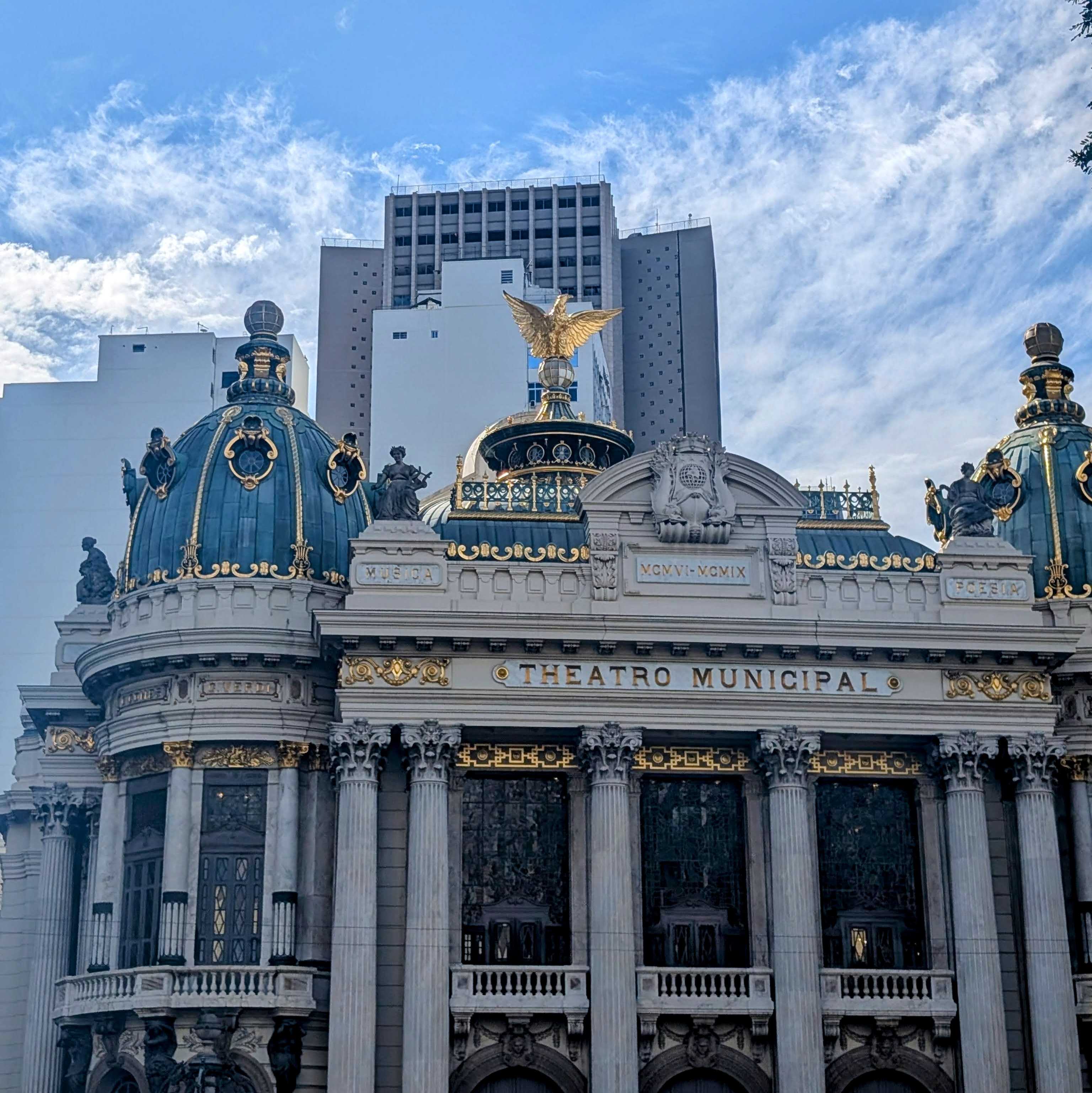
Across the square from the library, you can also admire the architecture of both the Câmara Municipal (City Hall) and the Theatro Municipal (Municipal Theater). A 10-minute walk from here will get you to our next stop.
9. Arcos da Lapa (Carioca Aqueduct)


Originally built in the 18th century as an aqueduct to supply water to the city, it now stands as a striking example of colonial architecture, and as a backdrop, a rather grand one, for the comings and goings of those who traverse the Lapa district. The bonde cable car also now rattles and clatters across the arches, carrying passengers between the Centro district and the hilly neighborhood of Santa Teresa.
Our final stop is just a few blocks away, but these couple of blocks can be a little dodgy, so double-check your directions before putting your phone safely in your pocket and let the sound of large numbers of tourists guide you to the last stop on our Rio de Janeiro walking tour.
10. Escadaria Selarón (Selarón Steps)


A vibrant and iconic staircase created by Chilean-born artist Jorge Selarón, who dedicated his life to transforming the previously dilapidated steps and surrounding walls into a colorful mosaic masterpiece with over 2,000 tiles collected from more than 60 countries.
I’m sure you’ve enjoyed this Rio de Janeiro walking tour. If you’re looking for more, here are all of my posts about Rio de Janeiro and Brazil, including tips for planning your trip and essential Brazil travel experiences.


Leave a Reply