Ah, Rio de Janeiro. A name that dances on the tongue like a mischievous samba beat, a city where the sun shines with an almost indecent enthusiasm. But do not let the miles of postcard perfect beaches deceive you, dear reader. For within this vibrant locale, nestled between verdant mountains and the vast, indifferent ocean, lie experiences both dazzling and, dare I say, occasionally perplexing. To navigate this labyrinth and find the best things to do and avoid any potential pitfalls, one requires a guide pointing not merely to the celebrated Christ the Redeemer, but to the lesser-known wonders.
Here’s my Google Map of the best things to do in and around Rio. Hit the “Follow” or “Save” button to save for later.
This post contains affiliate links and I may earn a small commission when you make a purchase using the links at no additional cost to you.
If this is your first stop in Brazil, read my 13 tips for planning a trip to Brazil.
Best Things to See and Do in Rio de Janeiro
- Head to the beach: The two most famous beaches in Rio are Ipanema and Copacabana and both offer plenty to do.
- Rent a chair and beach umbrella and simply sit as roving vendors deliver drinks and snacks.
- Enjoy a drink at a beach kiosk, possibly accompanied by live music or a futbol game on TV.
- Explore the water on a stand-up paddle board which one can rent from the south end of Copacabana Beach.
- Run or cycle the beach path which is closed to traffic on Sundays.
- Explore the subcultures along different sections of the beach.
- In Ipanema, Garota de Ipanema is the where the objectively attractive people can be found.
- The area near Rua Farme is popular with the gay crowd.
- Arpoador is popular for surfing.
- In Copacabana, the area near Rua Santa Clara is popular for futbol and fute võler (soccer volleyball).


- Watch sunset from Pedra do Arpoador, a rocky outcropping on the eastern end of Ipanema Beach.

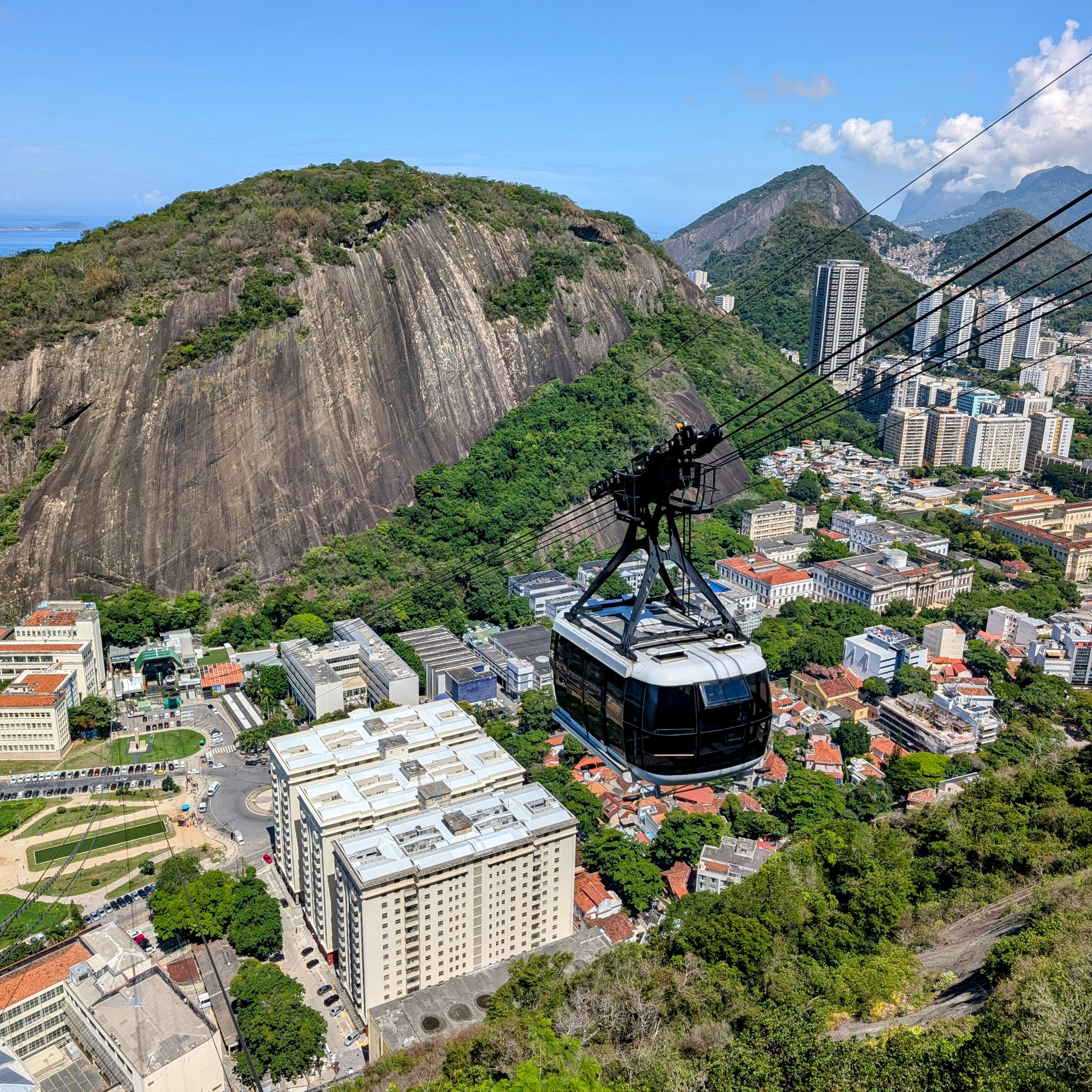
- Ride the cable car up Pão de Açúcar (Sugarloaf Mountain): The cable car departs every 20 minutes or so from Urca, carrying you up to Morro da Urca. Enjoy the views here, possibly stopping for snacks or souvenir shopping. If you’d prefer to skip the snacks and shopping, go to the right after getting off the first cable car and follow the Green Trail to the second cable car that will take you to the top of Pão de Açúcar. Enjoy amazing views and a cocktail at the top. Pro tip: go for sunset.
- Trilha da Urca is a moderately challenging hike down from Morro da Urca.


- Catch the views from Cristo Redentor (Christ the Redeemer): This statue can be seen from across the city at night. From the top, you can see everything. Pro tip: Go on a sunny weekday.
- To get there, take the Corcovado Railway (buy your tickets at least a day ahead of time online and get in line early so you can sit on the right side of the train). But to be quite frank, the railway journey was rather unremarkable, and the views offered from the train were, in all candor, a pale imitation of the panorama awaiting at the top.
- Should one desire an alternate mode of ascent, it is worth noting that upon arrival at the Corcovado Railway Station, one might encounter individuals associated with the Corcovado Car Service. These individuals, possessed of a certain aggressive zeal, hand out wristbands, which, for $R100, offer passage to the top via a shuttle.
- And if one is feeling unreasonably energetic, the ascent can be made by repeatedly placings one’s own two feet one in front of the other, starting from Parque Lage. The hike is challenging and repetitive, with little reward beyond the panoramic views at the top. Here are the hike details from AllTrails.


- Circle Rodrigo de Freitas: A lagoon in Rio de Janeiro that is a popular recreational area, surrounded by a 7km cycling and walking path, and offers picturesque views of the city, including the iconic Christ the Redeemer statue. Rent a bike or paddle boat from the east side of the lake or simply grab a caipirinha from one of the kiosks along the side of the lake.


- Get some fresh air in Parque Brig. Eduardo Gomes (Aterro do Flamengo): A major urban park constructed on 1.2 sq km of reclaimed land. It offers a wide range of activities, featuring sports courts, walking and cycling paths, and beautifully designed gardens. It is a beloved destination for both locals and tourists.
- Visit some museums:
- Museu da República is housed in what was Brazil’s presidential palace from 1897 to 1960. President Getúlio Vargas died by suicide here in 1954. Today, the museum provides visitors with a glimpse into Brazil’s republican history, displaying artifacts and exhibits that offer valuable insights into the political and social context of this important period. The palace itself, with its neoclassical architecture and bronze condors on its eaves, is a major attraction. The museum is temporarily closed as of May 14, 2025 but should reopen soon and the gardens remain open.
- Museu Histórico Nacional is dedicated to preserving and showcasing the history of Brazil, housing a vast collection of artifacts, documents, and artwork representing the history of Brazil from its founding to its early days as a republic. The museum occupies a complex of historical buildings, including a colonial arsenal from 1784. Keep an eye out for items like the throne of Dom Pedro II, a full-sized model of a colonial pharmacy, massive oil paintings that depict the horrific war with Paraguay, and gilded imperial coaches. The museum is temporarily closed for renovations until at least October, 2025.
- Museu de Arte do Rio is known for its unique architectural design, which blends historic and modern elements. MAR aims to foster a connection between art and education, offering a diverse range of exhibitions and programs. Look for diverse exhibitions that delve into the multifaceted nature of Rio de Janeiro, exploring its people, land, aesthetic appeal, and the societal challenges it faces. Regular admission is R$20, with free admission on Tuesday.
- Museu do Amanhã Museum is a science museum that explores ideas and possibilities for the future of humanity. Its striking, futuristic architecture reflects its forward-thinking themes. The museum’s exhibits delve into topics like climate change, sustainability, and the interconnectedness of life, aiming to raise awareness and inspire visitors to consider their role in shaping the planet’s future. The museum, with a weary sigh and a shake of its head, presents a rather gloomy outlook on humanity and the regrettable consequences of its actions upon the world. Regular admission is R$30, with free admission on Tuesday.
- Centro Cultural Banco do Brasil (CCBB) is housed in a stunning 1906 art deco building in the city’s historic center. It’s renowned for its diverse programming, which includes temporary exhibitions of visual arts, cinema, theater, music, and educational activities, and a permanent display on the evolution of currency in Brazil. Admission is free, but stop by the ticket machine or reception desk for a free ticket to the temporary exhibits.
- Museu Chácara do Céu is a beautiful mansion containing a collection of objects once belonging to an art patron and industrialist. One might observe paintings, sculptures, and other artistic endeavors, including works by individuals named Portinari, Di Cavalcanti, and Lygia Clark. There are also, it should be noted, furnishings and maps of a historical nature, dating back to a time when the world was perhaps charted differently. Regular admission is R$8, with free admission on Thursday.


- Explore murals along Boulevard Olimpico (Olympic Boulevard): As part of the city’s transformation for the 2016 Olympics, this street was transformed into a vibrant public space featuring art installations, including the iconic “Etnias” mural by Eduardo Kobra. The boulevard stretches along the Guanabara Bay, offering stunning views and a pedestrian-friendly environment.


- Ride Rio’s Iconic Streetcar: The Bondinho de Santa Teresa (Bonde) is a historic tram line that winds its way through the charming Santa Teresa neighborhood and over the Carioca Aqueduct / Arcos da Lapa. This distinctive yellow tram is a beloved symbol of the city provides tourists with a unique and nostalgic experience, showcasing panoramic views of the city and a glimpse into Rio’s past. A return ticket costs R$20. Choose a seat on the right side of the tram for views. Pro tip: go first thing in the morning or prepare for a considerable interlude queueing in line before boarding.


- Climb Escadaria Selarón (Selarón Steps): A vibrant and iconic staircase created by Chilean-born artist Jorge Selarón, who dedicated his life to transforming the previously dilapidated steps and surrounding walls into a colorful mosaic masterpiece with over 2,000 tiles collected from more than 60 countries.


- Imagine stydying in the Real Gabinete Português de Leitura: Inside this library, one finds not dusty relics under glass, but rather shelves upon shelves of books, reaching towards the ornate ceiling as if striving to touch the very heavens of human knowledge. It is, in essence, a sanctuary for those who find solace and delight in the company of well-bound books.


- Visit the Fundação Biblioteca Nacional, Rio de Janeiro: This edifice stands with a certain quiet dignity, as if harboring countless stories within its walls, stories bound in leather and paper, their pages whispering secrets only to those who take the time to listen. Inside, shelves upon shelves guard tales of faraway lands, forgotten poets, and the intricate story of human history. It is a place where the hushed rustle of pages provides a sanctuary for contemplation and the gentle unfolding of narratives.


- Unwind in Jardim Botânico (Botanical Garden of Rio de Janeiro): A sprawling green space located in the heart of Rio de Janeiro. Founded in 1808 by Dom João VI of Portugal, it was initially intended for the acclimatization of spices like nutmeg, cinnamon, and pepper. Today, it serves as a public park, showcasing a vast collection of Brazilian and foreign plant species, including numerous endangered ones. The garden’s iconic avenues of royal palms, its serene lakes filled with huge water lilies, its large enclosed collection of orchids, and its diverse ecosystems make it a popular destination for both locals and tourists. Regular admission is R$73.
- Escape the more clamorous aspects of city life in Parque Lage: Imagine, if you will, a grand residence, not unlike one you might find illustrated in a rather old and slightly dusty volume of architectural drawings, nestled within a landscape that seems to have been painted by an artist with an exceptionally generous hand and an affinity for tropical foliage. Here, one might stroll along pathways, discover a tranquil duck pond (but with koi fish), climb a crumbling tower, or stumble upon an aquarium hidden between cool, damp stones.


- See the Arcos da Lapa (Carioca Aqueduct): Originally built in the 18th century as an aqueduct to supply water to the city, it now stands as a striking example of colonial architecture, and as a backdrop, a rather grand one, for the comings and goings of those who traverse the Lapa district. The bonde cable car also now rattles and clatters across the arches, carrying passengers between the Centro district and the hilly neighborhood of Santa Teresa.


- Visit the Catedral Metropolitana de São Sebastião: A structure of such striking and peculiar design that one might initially mistake its conical form for a rather enormous beehive fashioned from concrete. Unlike the more traditionally ornamented cathedrals one might encounter, this edifice embraces a stark and almost industrial aesthetic. Inside, however, the visitor is greeted by a surprising play of light filtering through towering stained-glass windows that stretch to the very apex of the cone.


Go hang gliding! This company and this company are both experienced and highly rated.
You’ll want to click here! This article is now featured on GPSmyCity. To download this article for offline reading or create a self-guided walking tour to visit the attractions highlighted in this article, go to Walking Tours and Articles in Rio de Janeiro.
May you embark on your journey to uncover the best things to do in Rio de Janeiro with a spirit of cautious optimism and a satchel full of sensible shoes. If you want more, here’s everything I’ve written about Brazil.


Leave a Reply