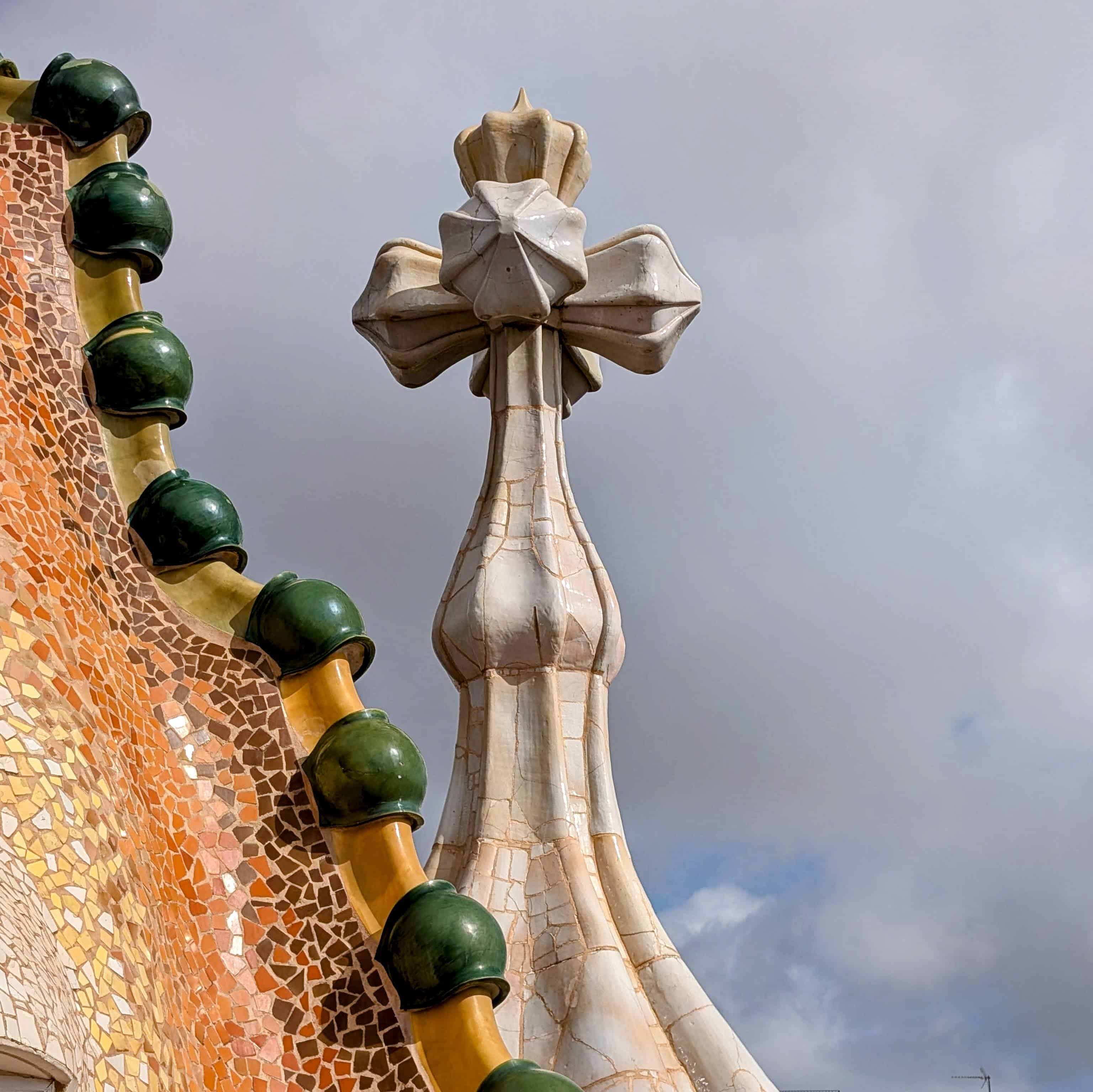
If you are reading this, it is likely that you have stumbled upon the idea of the Catalan language, a language as as peculiar as it is perplexing. It is a language that has witnessed the rise and fall of empires, the birth and death of heroes, and the quiet joys and sorrows of countless generations. But much like a forgotten relic, has been largely cast aside and neglected.
If you find yourself in Barcelona or another Catalan speaking area, you may want to know more about the Catalan language and learn a few essential phrases to help you avoid the pitfalls of miscommunication and the scornful glances of the locals. I shall endeavor to be your guide through this tumultuous terrain.
- Where the Catalan Language is Spoken
- A Brief History of the Catalan Language
- Helpful Catalan Phrases to Know
- More Tips
Where the Catalan Language is Spoken
Catalan is one of three official languages in Catalonia (or Catalunya in Catalan) along with Spanish and Occitan (Aranés). Catalonia is a populous and prosperous region in Spain on the northeast of the Iberian peninsula. It includes the vibrant city of Barcelona.
In Barcelona, a peculiar situation has arisen, where most residents speak both Spanish and Catalan with equal fluency, switching from one to the other with the ease of a chameleon changing its skin.
But the Catalan language is not confined to Catalonia. Within Spain, it is also used in neighboring Valencia, the Balearic Islands, and Aragon. The Balearic Islands include Ibiza, Formentera, Mallorca, and Menorca, travel destinations favored by partiers, sunbathers, and unfortunate cruise ship passengers.
Outside of Spain, it is the sole official language of Andorra, a small European country whose economy relies on winter sports tourism. Catalan is also spoken in the remote and often overlooked Pyrénées-Orientales department of southern France. And it also finds a curious home in the Italian city of Alghero on the island of Sardinia.
Despite its seeming widespread use, the Standard Catalan language now finds itself perilously close to the precipice of oblivion. The UNESCO Atlas of the World’s Languages in Danger has deemed it “Vulnerable.”
A Brief History of the Catalan Language
I shall endeavor to provide a brief overview of the Catalan language. I confess to a lamentable ignorance of Iberian history prior to researching this particular topic, and thus certain details may be slightly askew. Nevertheless, a brief examination of the language’s past may provide context in understanding its present-day usage.
Origins
If one were to assume that Catalan were a dialect of Spanish, one would be incredibly, regrettably wrong. The Catalan language is markedly different from Spanish and evolved separately. It is said to have diverged from the common Vulgar Latin of the Middle Ages in the eastern Pyrenees.
By the 15th century, the Catalan city of Valencia found itself the social and cultural center of the Crown of Aragon (a Medieval precursor to modern Spain that also included large parts of what are now France and Italy). The Catalan language was spoken far and wide across the Mediterranean world. The Royal Chancery sought to standardize this language, ensuring consistency and clarity in official documents. As a result, Catalan flourished as an official language as far as Sicily until the 15th century, and in Sardinia until the 17th.
1700ish – 1900ish in Spain
The conclusion of war of the Spanish Succession in 1714 ushered in a dark era for the Catalan language, as the newly crowned King Philip V established an absolute monarchy and imposed a rigid policy of linguistic assimilation.
A particularly cruel decree, the Royal Certificate of 1799, forbade any performance of songs or dances not in Spanish. This measure further marginalized the Catalan language, robbing it of its cultural vitality and prestige. As Spanish rose in prominence, Catalan began a slow, agonizing decline.
1900ish – 1939 in Spain
Catalan spelling was standardized in 1913, and the language was granted the distinction of official status during the Second Spanish Republic (1931-1939). The Generalitat (Catalonia’s autonomous government, established in 1931) made a feeble attempt to normalize the use of Catalan within its administration and even ventured to promote it in schools and at the University of Barcelona. This era offered a fleeting respite from the oppressive measures that had stifled Catalan, but the reprieve was short-lived.
1939 – 1975 in Spain
The Francoist dictatorship (1939-1975), a bleak era in Spanish history, imposed a cruel and oppressive regime that sought to eradicate regional identities. Among its many dark deeds was the suppression of the Catalan language. The regime forbade the use of Catalan in schools and public institutions, effectively eliminating its use in public spaces and silencing the voices of a proud people.
Modern Times in Spain
The transition to democracy in Spain brought with it the institutionalization of the Catalan language as an official language in Catalonia, though Spanish is still the only official language in Spain as a whole. This decision has led to the widespread use of Catalan in schools, healthcare, media, and government. The mandatory teaching of Catalan in all Catalonian schools has further solidified its position and prestige.
And so, in Catalonia, a unique linguistic landscape has emerged, characterized by a large bilingual community that is unparalleled in Europe. Most signage is in Catalan, restaurant menus are available in both Catalan and Spanish (and sometimes other languages), and most residents speak both Spanish and Catalan with equal fluency.
French Revolution to 2007ish in France
In the tumultuous aftermath of the French Revolution, the newly formed French First Republic (1792-1804), in its misguided zeal for unity, enacted a series of draconian measures aimed at suppressing the rich tapestry of regional languages such as Catalan.
Modern Times in France
In 2007, the General Council of the Pyrénées-Orientales made the extraordinary proclamation that the Catalan, a language long spoken in secret whispers and furtive glances, would be acknowledged as one of the départment’s regional languages, but French is still the only official language.
Andorra
In Andorra, Catalan has somehow always been the sole official language.
Helpful Catalan Phrases to Know
Here are a few phrases that may prove useful when venturing into a Catalan-speaking region, such as the lively city of Barcelona, the sun-drenched shores of Valencia, the idyllic Balearic Islands, or the secluded principality of Andorra.
- Hello | Hola
- Goodbye | Adéu
- I don’t understand | No ho entenc
- Yes | Sí
- No | No
- Do you speak English | Parles anglès?
- Please | Si us plau
- Thank you | Gràcies or Merci
- The menu | La carta
- A glass of wine | Una copa de vi
- Cheers! | Salut!
- Bon appetit! | Bon profit!
- The check, please | El compte, si us plau
More Tips
Most people you encounter as a visitor will also speak enough English to communicate with you as long as you speak plainly and don’t try to impress them with your vast English language vocabulary.
You will also find English language menus at most restaurants that you visit in tourist areas.
If all else fails, Google Translate is an excellent tool. For best results, download the app and the English and Catalan languages before you travel.
- Download Google Translate from Google Play on your Android device.
- Download Google Translate from the App Store on your iPhone or iPad.
- Here’s how to download languages in Google Translate.
- Here’s how to translate text in images with Google Translate, for example if you’re trying to read a menu in Catalan.
- Here’s how to translate written words, which is helpful if you want to look up a single word or short phrase, such as a menu item or product label.
- Here’s how to translate by speech, which can be helpful if you want help translating a short phrase or set of phrases to have a brief conversation.
I hope you’ve enjoyed this Catalan language guide. If you want more, here’s everything else I’ve written about Spain.


Leave a Reply